a conceptual argument, with the real life rammifactions on how we will live now and in the future
A Super Short History of Money
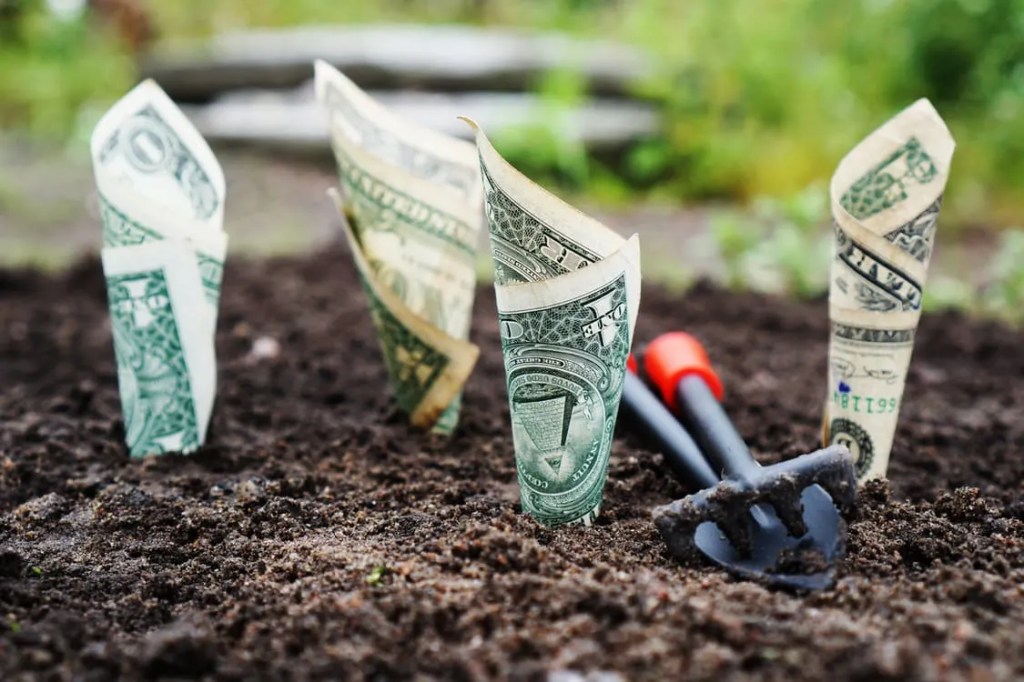
The birth of money has been symbiotic with the upward progression of human development for a long time, currency as we now have it; manifests the standardization of value with our economic system. Contrary to the belief that we’ve “always” had money, it emerged after humans had developed into more complex settlement patterns; our early city-states. Money was introduced as means of taxing, organizing, facilitating trade that was already occurring into a standard system that could be controlled, as opposed to the sporadic and flexible existing market configuration of trade: the barter system. The barter system was the haggle-trade practice that traded goods for goods or a service: getting what you needed for what was valuable to someone else. This system may seem inefficient: what makes something an equivalent value to something else? It is perceived value. The idea that something is worth enough to part with something else. Be it for your continued survival or ease of living, this concept used to underwrite how we cooperated and traded goods and services. The introduction of money allowed for a destabilization of this core value and practice, that may have accelerated human development; has become something we must abandon as fast as possible to live better more enriching lives together.
We start at the market:
Let’s say I sell you all my wheat crop for 200 dollars (this is a hypothetical for the conditions not the value), this is a fair price, most farmer’s crops are worth this amount of currency. Next year the value of the currency changes and the exact same crop is worth 150 dollars. This can be because of several conditions in the market: there could be an influx of wheat, there could be other areas that are now connected to the market that sells wheat at a lower price or the value of currency increases as inflation trends higher.
Many people will be like “duh, this makes total sense why is this guy harping on it, it’s called economics.” This is the fundamental issue of money; it is not a system that recognizes the human condition and therefore flexible to actual value, it is only elastic to perceived value. (or the invisible hand of the market) What we over see, as a people: the farmer in this scenario, does the farmer’s time fluctuate? Yes, technology may make his output more efficient but without that change in process, a change in crop price is a change in the value of his life which diminishes his value in a society dictated by a system of inflexible and unreliable standardization. This is a disconnect in value, which has allowed our monetary system to let people accumulate wealth from monopolizing, capitalizing and restricting access of resources. This is the ugly face to the invisible hand, the privilege to control resources. The easiest example is the energy sector and its output, which is the backbone to our economy and therefore the measure in which everything else is valued in relation to. This is one of many key industries that should not be allowed to be privately owned. The fossil fuel industry is exploiting resources in our planet fixed to geographical locations with no real validity to private ownership, (I will explain why throughout this piece but it should be noted other industries in this boat: agriculture, pharmaceuticals- this is a trickier industry but it shouldn’t be an industry in some regards)
its like back when we hunted and gathered, and you got all the good berries and would only share with the hunger people for sex or something you weren’t entitled to for something that you got from the forest everyone lived in on a naturally growing bush, with relative ease…. think about if that’s fair?
Throughout our history the practice of money in general, has been used to subjugate and control the lives on the broader human population to the subservice of few “lottery winners” and cheaters. This is not market dynamics, it is systemic control of resources through opportunity and manipulation motivated by greed, and in most cases not an increase in actual value. The increase in value that capitalism brings is the by-product of the mentality that surviving is ultimately hinged on our ability to extract as much from each other as we can. Innovation is simply the product of the process ironically. This is unsustainable and has allowed our lives to have flexible value to that which we can never change, only manage. Can you stop eating? Can you stop needing a home? Can you stop drinking water? No, we cannot; so allowing proprietary manipulation of common assets to be controlled by the necessity value that they can garner is a means of control not a market. We should remember that we are humans: a social animal, and consumption is a function of primal survival that all life needs, not who we are.
The game:
As money currently works in the free market, national currencies are backed in resources (like the petro-dollar in many western states) or calculated to reflect the value of traded assets and commodities by large national banks and international trading. This allows for a contrived social class system centred on an “abundance” of capital, which has been the fundamental issue with the dissemination and use of money. This creates an inflexible relativity to the shocks of the market as well as hoarding, which makes money a tool for manipulation; just as it has been from its inception. When wealth is removed from the system, it still is valued relative to the market change (think banks or stable commodities like gold), which imbalances the system of standardization making loaded hands in which to play. This economic advantage makes it easier for rich people to stay rich and limit the way for others to become rich, unless through the same market practices (extraction) and enough capital. Circulating currency and stacked currency (hoarded capital, large amounts of accumulated wealth) makes the system inflexible. Asset hoarding and market control allows the medium (money) which is supposed to standardize things, become a fixed system, that inherently lets the wealthy game and control the spectrum of value. This control, creates the ability to manipulate the favourite curved lines of the capitalistic market economy: supply and demand.
The Illusion of Standardization
Another problem, is that the social narrative sees the value of money fixed to the value of human life which is then extrapolated in context to the cost of items and services: from day to day things, all the way to things pivotal to survival and longevity. It is the necessity of possession and services that make money a functioning tool for control. Money has become in many ways, the intermediary in which we interact with one another; substituting bartering trade and social trust, for a semblance of stability and fairness. Yet this system is notably not stable, (the 2008 global recession is due for the most part to weak government regulation on credit, lending and high risk trading practices) in it we have seen a revaluation of human life and the subjugation of the human experience to a controlled “free” market. Which only serves those who have the advantage of wealth in the system. Capitalism and money has only become a means of extracting wealth along a value chain. The pinnacle chain, which all else is sequestered from, is the human life span. The questions become: why should someone value your life and profit from it, if we are in fact all equal? How did they come to own you? Why should this practice not be continued in our social progression if we are to live better longer lives?
Now the main opposition of these arguments will be the following: how are we to determine the value of resources? and this system allows for social mobility through redistribution of progressive community coordination so why is that a bad thing? (as in my post on nations, ‘community’ refers to the like coordination of an historically, ideologically or ethnically homogenous population defined by common distinction in values, and which support the continuity of its members and existence through reinvestment/ support systems) both counter arguments are irrelevant and the product of ideological indoctrination of the system. I shall address the latter point first before circling back to the former. The need for social mobility in our society highlights the basic inequality that exist in the value of human life. In a system in which born life* is the pinnacle of value, the need for social mobility is not an issue, as such a society would look to insulate the ability to flourish as its principle focal point and ideal. We currently don’t value the lives of the members of our population, we value what people produce and this is the extension of the control and manipulation that I have described earlier. In our system, valuing life based on output is the inherent issue of trying to standardize flexible commodities and by extension unequally endowed people. So how do we value resources? We value them based on the actual scarcity and not the manipulated availability. The right to control natural assets is the right to control the systems that give us life and is therefore a means of control and manipulation of the population. This is the theme that underwrites the systemic issues that have stymied the progression social freedom regardless of the development of human technological and overall progress. This a circular argument that is underwritten with the question of who controls your life and what gives them the right to control the resources that we all need. I hate to reference my own article again (https://medium.com/@jamesrhule/moving-past-nation-states-in-the-21st-century-eeedaebc2653#.nvstfup06), but understanding how nations operate is only a macro orientation to another macro issue that this article is dissecting. We give a lottery to life via inheritance and differential experiences afforded by resource control. This is not to disvalue the merit of creative individuals; but as I shall discuss in the following sections: we can preserve the innovation while removing the subjugation of human life, by transforming the monetary system and the value of human life.
Social Value and the Development of Possession
The concept of material possession is far more intrinsic to humans than money. In numerous circumstances, our development of tools has allowed us to transition into the species we are today. So the questions remain: what should be expected in life? what is a luxury? and what is a want? and what is a need? I don’t and will not try and define what people are entitled to, Maslow’s hierarchy of needs is a good start to understand what we should value and socially ensure as born life right in our pursuit of a greater life experience and the development of a society that values human life. However, this is an issue for the progression of the concept of value as it pertains to life. As I shall explain, the concept of material possession and the idea of socially motivated material possession, beyond practical usefulness, has transformed the psychology of consumption and why we live as we do. This concept is both good and bad, constructive and destructive. The value of money in a closed resource system is linked to the entitled nature of possession in a lottery life system and is not congruent with the ideal that all life is valued, and should be equally valued. With no proper equity measure that can develop our current monetary system into an equitable system, we are only faced with reform followed by dissolving the system all together. It is simply impossible to fix in current context and with the current mentality of collecting wealth as it is inherently coupled with an aversion to give it up.This simple idea has been perpetuated into an market ideology — capitalism. This is not an attack of capitalism; it is an explanation of the thought that drives the thought system which currently dominates our global marketplace.
There is deep value in staking wealth and resources to explore new ventures and ideas, the ability to horde wealth from innovation is what creates an inequality. As the innovative product becomes basic to the trend of contemporary living, there is a disconnect between the value of creation and the value to society. We commonly accept that if you make it you should profit from it, but this doesn’t fuel innovation. Innovation is fuelled by the context of a challenge in the day to day human experience, we take this problem and super impose our ability to harness our intellect and experience to find a streamlined solution to the problem. The value is the transferability to the lives of other people. So does that mean we should be able to control what makes our lives easier? Is there a basic standard in which members of our population should live? This is the divide that we must address to progress. Reinvesting our private resources into social institutions is merely the base of developing past this problem (in most democracies this isn’t even the real redistribution and focus of tax collection, the burden is on citizens and not private corporations more often than not) It is crucial to note that in most nations, the richest companies are those that avoid taxation and capitalise on lack of regulation to extract more from workers or resources. Meaning those with money aren’t paying to help those without gain the tools to get money in our global economic system. Some of the less democratically corrupt, social democratic nations of the Nordic region have seen the investment in the elevation of the individual, investment and subsidies to the person, which is arguably the most progressive regime we can hope to adopt in a free market society. However, this type of achievement is not an easy policy position to get to, it is the understanding that life should be allowed to flourish that is difficult to permeate the collective conscience to demand it, but this is direct contradiction to market economies designed to extract wealth through any means. And they own the countries, not the people because they control resources and by extension the wealth/power in the broken system of money and nations.
Now I would like to look further at a point I mentioned, material possession. Material possessions as we currently experience it in our consumerist society is not the need or even the real want for more. It is the illusion of desire to complete our short comings in social status and the perceived social hierarchy of our peers and the public at large. The material value that we attach to objects that do not serve a purpose for our comfort are often possessions that mark our internal value in a social way. To be frank, the obsessive nature in which we do so, is reminisce of animals marking their territory and defending/ lording their prey to their pack; it serves the purpose of validating our worth through measurable and comparable metrics of validation. When you think about that, the same issue applies in our relationships with money as a social device when you consider why we are obsessed with new things and flaunting them. They fuel our insatiable nature as humans and our desire to control the uncontrollable, which is what we do in an open capitalist market to nature. The difference is between human nature and mother nature.
The Transition to a Money-less Society
To transition to a money-less society requires policy, collaborative action and mobilization, wide spread realization into the value of human life and an understanding of our right to this planet and its benefits. What I have so far failed to address is how do we come to an understanding of how we are indebted to each other, and how we should value our resources and our time. This is a fundamental shift that must be developed to move past money as a society. The value in which we create, is value to those that perceive it valuable, therefore to change the methods and systems which dictate our market: we must collectively own, and as necessity diminishes control that which is valued at a lower scale. The larger the asset relative to the function in our common lives, the greater its collective ownership and oversight should be. This statement is in direct contradiction to the systems of capitalism and the open market but is sustainable and complimentary to the principle that all human life is equal and should be valued. One could argue that this is already the system in which we operate, it is false and whoever is telling you that does not understand economic or the reality of humanity therefore are not a valid resource. We allow the system in which our world operates to be controlled by a few key people, the 1% own close to 50% of the world’s private wealth. (https://publications.credit-suisse.com/tasks/render/file/?fileID=F2425415-DCA7-80B8-EAD989AF9341D47E) for a few number of industries this type of wealth should be only allowed because it has yet to permeate the routine and social common of human life, but this is not the case in the industries I’ve previously mentioned(energy, argriculture, pharmaceuticals etc). however, as we develop the standards in which we live elevates and the problems that we solve should be accessible to everyone, not if you can generate enough wealth to afford it. This is not a society which values the human life, it is a society that values the siloing of resources and the common measure of status through inputs that are made unequal from birth. This is not a society in which we should be proud of, it is a society that in its numerous cases of abuse, manipulation, subversion and resource hoarding demands to be made free and the value of life respected. Developing this true redistribution and value is understanding that we live by each other’s help and that we are not lone animals, we are a collective civilization of equals that need to be treated and valued as such, that our resources don’t belong to one person or entity and that we live to experience the bounty of life not the scarcity of each other’s greed and control.
As we progress in the current market trend of automation, artificial intelligence, interconnection and lowered costs, we see two trends happening already: the increase of productivity and a decrease in the available jobs. Limiting the opportunity to further oneself and provide for their families, spread their knowledge and develop new ideas that we could all potential adopt or appreciate. Given the oppressive nature of the accumulation of wealth in the form of money; the disparity, low standard of living and jobless is not going to get better under any private wealth system. In fact, the innovation market is only going to exaggerate the conditions we currently experience: a low wage service class, wealth concentration to an owner class and a heavily taxed and financially burdened middle class. This particular idea of class, only exists in a system in which assets are standardized; separated from actual value, manipulated by a manufactured preconception of social value and unequal to the randomness of life/ distribution. We already perceive life to be a lottery, the money system is increasing the stakes; making winning better and losing hard the common outcome for a life that won’t be worth living given the effects of greed has shown on our current state in society.
Regardless of who creates the value, if it’s any good; we will all love and use it. The fact that we value creative and possessive ability in a disproportionate way, means the problems of those not gifted by a birth standing or aided by a rich social system will live a life with little room to express themselves and truly experience anything worth experiencing. As the concentration of wealth and control cripples the masses that they extract wealth from. Controlling assets are in a process of shift, from extractive resources and labourers to transfer to high skilled human capital as the market becomes more innovative; this is essentially the same thing that has always propelled the “money system”. This is still the process of creating value from what we all value, and doing so by the means in which the owner controls it and offers it to others, extracting wealth along a value chain cumulating to a concentration of wealth at the top tier. This is the same process that has been used to control the standard of living and access to resources to the disadvantage to those that produce the wealth and who’s labour give it value, only technology is increasing the payout and lowering the distribution of wealth along the value chain of production. The transition that the global market place is going to face is only leading to a collapse and cannibalization in resource, not customers while restricting the access to the market by unequal starting points and ability to address gaps in the market. The increased unemployment, artificial inflation and restriction while extracting the social wealth from underclasses diminishes the buying power of the middle and lower classes, virtually leaving them in a position of helplessness and inability to help themselves. this is a dangerous position of any civilization, and is the mark that it cannot continue function. This offers the question of who pays for the social redistribution in a system in which the highest tier gets there from hoarding resources and avoiding redistribution? Those whose work is extracted for a stagnate wage of “standardized monetary value” and lack the means of mobility? when increasing standing, is increasing one’s ability to control and extract. This is not a functional system; this is a race to nothing, for nothing but fabricated idea of value, this is the money game.
*The argument of pro-life and pro-choice is not truly an ethical argument, in legislating control over the normal processes of the human body and the right to alter them is not valuing the life of the individual in question, it is valuing an intangible standard that we are not demonstrating in our society as a basic ideal as is. Therefore, denying the exercise of reproductive rights of a human is in contradiction to what pro-lifers are demanding. The right to life is not enforced to those already living, so implementing the right on cells within a living body is a stark contradiction and manipulative with the veil of moral righteousness. Go save a living life and stop telling people what to do with their bodies.
agriculture ai artificial-intelligence books business capitalism christianity climate climate-change consciousness culture economics economy environment faith farming finance food god health history intimacy life love mental-health mindfulness money news philosophy physics politics quantum-physics race racism relationships science sex sexuality society spirituality sustainability sustainable-agriculture technology war writing
 JIMOTHY'S huE
Leave a comment